

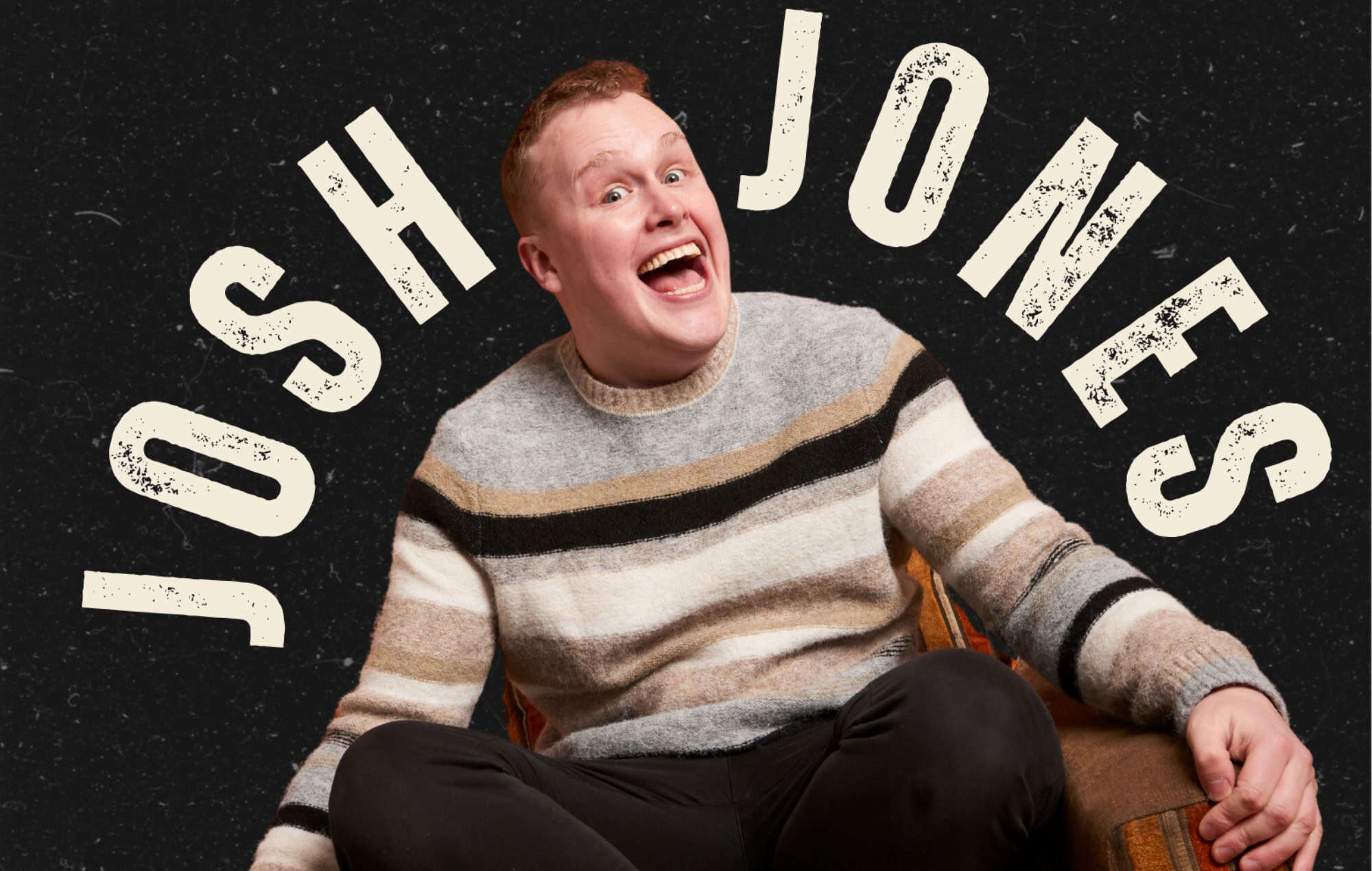
Josh Jones. CREDIT: JOSH FAITHI/PRESS
Comedian Josh Jones is a self-described “Catholic teacher’s worst nightmare” (gay, dyslexic, and left-handed, as he often quips on stage). But, while he can – and does – poke fun at our cultural impulse to box tick, he’s no great fan of it.
He’s out on his ‘I Haven’t Won The Lottery So Here’s Another Tour’ trek across the UK when we sit down, and when the class dimension of British comedy pops up, he says it actually didn’t occur to him that so few people in the scene were working class.“Everyone I know is working class, so I kind of thought everyone else was, and then there was maybe like 10 per cent of people who were, like, posh,” he laughs. “When I stepped into this world, I realised that it’s probably more fifty-fifty than I thought it would be. After doing it for over ten years, I don’t think it really matters if you’re working class or whatnot – I think if you’re funny, it’s fine.”
While it’s true that the one thing class can’t dictate is the ability to get a genuine laugh — the industry undoubtedly remains dominated by privately educated comics (see: the various career successes of former Footlights members) who can safely absorb the financial risks a career in comedy involves.
Jones, who gave up his “day job” in 2019 to pursue comedy full-time, says it’s precisely because of that that he resists the idea of being a diversity booking. “I’d hate to get booked on something because I was gay or working class,” he says. “I want to get booked because I’m funny and I deserve it, because I’ve worked for it.” Having made appearances on the likes of 8 Out of 10 Cats Does Countdown,Would I Lie To You? and The Jonathan Ross show under his belt, we sat down with Jones to discuss rising up in rugby clubs, the similarities between wrestling and comedy, and how podcasting is changing the game.
What initially drew you to comedy?
“I got told to do it, and I’ve been on the circuit for eleven years, doing comedy clubs, rugby clubs, gigging everywhere. So I’ve put the miles in.”
How was performing to a room full of rugby players as a gay man?
“Honestly, I think as long as you’re funny, they’re not bothered – but it definitely puts a bit of hair on your chest. But it’s a good place to learn how to do it, because if they don’t think you’re good, they’ll tell you. And you know, even if you are naturally funny, stand up is a skill that takes years to learn how to do it, you know. So it was a good place to learn.
There’s been some gigs who have absolutely died on my arse, and luckily, they don’t happen that often now. But sometimes you’re like, ‘Oh God, can I do this?’ I still get that now, but I think the people who don’t are normally not very good, to be honest.
The ones who think they’re the dog’s bollocks are normally pretty average.”
What do you credit your own progression in comedy to?
“My granddad was a joiner, and he said that when he was nearly retired, he was the best he ever was, because he had years of experience. And I think stand up is a bit like that, it’s kind of like a trade. You just learn as you go and as each year, you just get better. So I’m better at writing jokes and I was and I’m better at performing than I was.
You’ve been out on tour since last year. When you’re going into these new rooms every night, how quickly can you attune to the audience?
“Normally, you can tell by your first joke. I can tell by the first 40 seconds what kind of jokes will work better than others. You kind of judge a book off the cover. But sometimes you are wrong. You might be in quite an affluent area in a small town, and they all might be old, and you’re expecting them to bit more reserved, and then you get on stage, and you’re like, ‘God, they’re all filthy!’ So you don’t know till you do it.”
What kind of things are you drawing from with your material?
So at the moment, I talk about how my boyfriend’s a doctor. I’m like, ‘I’m just doing this for fun because I don’t need to do it for a job anymore! I have basically shagged my way into a better postcode!’ Now, I’m living in a well nice area, I go to my local butchers, and I’m living a little tradwife life, becoming a bit of a class traitor. It’s fun!
The tradwife thing is a good segue to the social media side of the job, which over in the US seems to be booming, especially with comics now a staple on major podcasts. Do you think the same thing is happening here?
“There is a huge podcast community, especially in the north of England, and there’s quite a lot of comedians who are selling out tours in big rooms because of that. I think now it’s really broad where people are coming at stand up after seeing it on telly, and seeing that a podcast can sell a tour just as much as a TV show can now, is crazy.
The landscape of comedy is definitely changing – and SNL just getting a UK version must be encouraging.
“It’s brilliant. I watched quite a bit of it. It’s really nice to see comedians getting work. I don’t think I’d be very good at it because I can’t really do accents, so every sketch would just be a gay Northerner. And I’ve got quite a few friends in the writing room, and it’s given a lot of really talented people, some work for a couple of months, and that’s all we want, really.
And what kind of things projects do you have in the pipeline?
“As soon as this tour’s done, I’ll start writing my next one, and I’ve started writing a play. You’ve got to have irons in the fire, but you never know which ones will work. But yeah, it looks like I might have a good year. Plus, I need some good work because I’m trying to decorate my entire house, and it is so expensive.
“It is mad. Sometimes, I’m like, ‘Wow, I’m literally just writing jokes in my kitchen and then going on stage and telling them. And that’s my job, such a stupid, silly job. I actually think sometimes you take it for granted, because you’re just like, ‘Oh, a gig, gotta work on this, gotta work on that’. And then when you take a breath, you’re like, ‘Bloody hell, I’m really doing this.’”
And you’ve already got a lot of TV work (Would I Lie To You?, The Jonathan Ross Show) under your belt. How does it differ to stand up?
“When I first started doing telly, I was a bit nervous, but the thing is, if a joke don’t work, they’ll just cut it out. So it kind of gives you a bit of a freedom to be like, ‘Oh well, l know they’ll put the good bits in.’”
As you mention in your standup, you’re a big wrestling fan. Do you see any similarities there?
“I think it’s one of those where they make it look easier than it is. And that’s the same as good stand up. A good stand up will make someone go, ‘I can do that’, and then they give it a go, and they’re like, ‘Oh, actually, no, I can’t.’
“For me, if a joke doesn’t land, it will just kind of break my spirit, whereas in wrestling, they’ll break a limb.”