

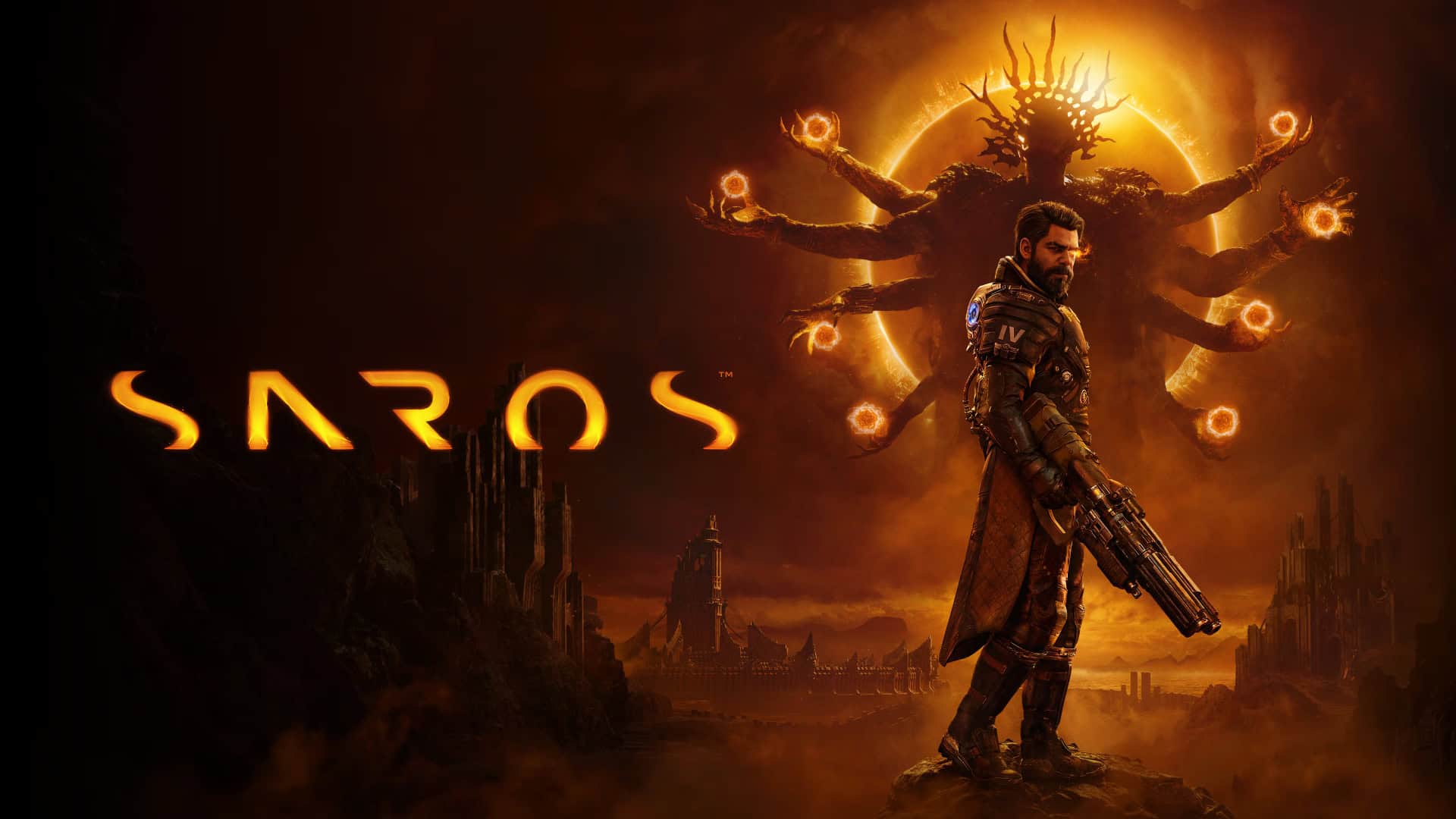
Saros is a rougelite third-person shooter set in a bleak sci-fi world. It’s also the spiritual successor to the eerie Returnal, but is it worth your time?
Saros puts players in the boots of space chartist Arjun, who’s investigating the disappearance of an earlier expedition. Once he and his team arrive, everything starts feeling very Aliens with a touch of Doom thrown in. It’s tense, and the story made us excited to push forward and see what happened. The team soon discovers they’re in grave danger as hostile entities attack, while a solar phenomenon begins impacting their sanity, giving Saros some creepy Dead Space vibes.
While the game borrows from some of the titles above, as well as Housemarque’s own Returnal, the story is actually a sci-fi adaptation of The King in Yellow, a short story collection by writer Robert W. Chambers. Those who are familiar with this collection will soon see how cleverly it serves as a basis for Saros, but that’s something we’ll leave to the player to piece together, as going in knowing the source material and seeing what Saros did with it was part of the fun for literature geeks like us.
What we loved about the story was just like with Isaac Clarke in Dead Space, the players feel Arjun’s existential crisis along with him, never fully knowing if the protagonist genuinely is descending into madness, or if more nefarious forces are involved, or a mixture of both. While Saros is a third-person shooter above all else, like Returnal, its flirtation with cosmic horror means survival horror fans will also get a kick out of the adventure.
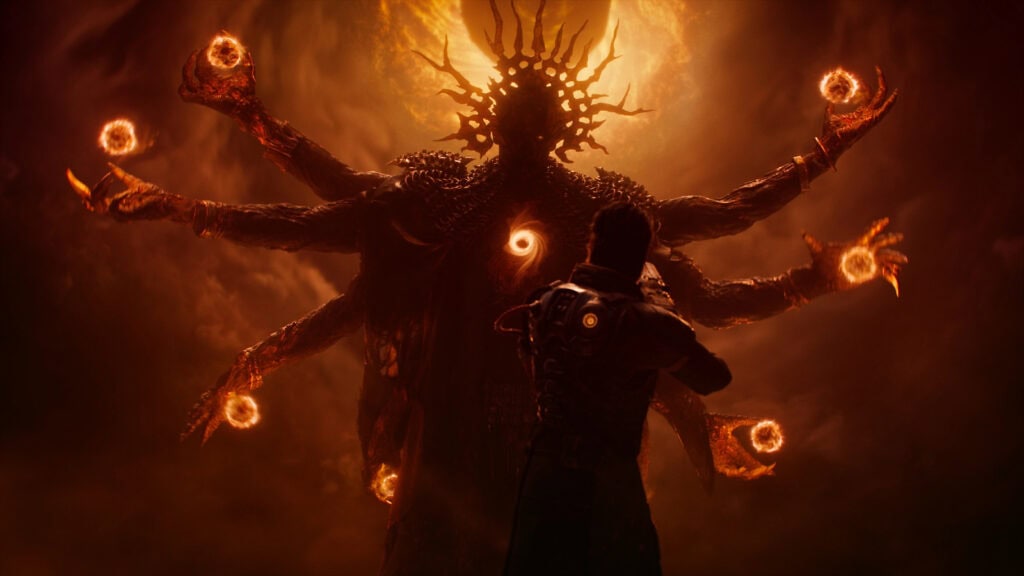
Housemarque has some epic bosses, but they’ll make you suffer. Image credit: Housemarque
Try, try again
Exploring and blasting enemies make up the bulk of the experience, and those who played Returnal will be instantly at home and ready to jump back into the action. The game is split into several large levels that players will need to complete in one run, or start again from the beginning, with the game mixing things up again. So in classic roguelite style, each map is unique. This is great for replayability, but as with all games in this genre, it may alienate those who prefer the curated, perma-map experience. While the game does feature distinct biomes for its levels, they’re pretty much all an industrial hellscape.
You’re also going to die, a lot, which means you’ll be starting levels from scratch plenty of times. This is part of the Housemarque’s signature style, but those who hate games where you lose progression will find it irritating. Be warned, this isn’t a checkpoint every 5 minutes of playtime kind of game. Know that going in. But those who do enjoy this sort of experience and challenge will likely get a kick out of Saros’ uncompromising nature. As with Souls games, every death before ultimate victory was a trial run preparing you for the time you win. The only difference is that you can forget about remembering enemy placement and routes.
The good news is that the shooting mechanics in Saros are devilishly fun. Dying never really bothered us as it just meant that we got another opportunity to blast some nasties. The gunplay doesn’t feel weighty and satisfying in the way that Pragmata does, instead everything is fast-paced and bouncy, feeling more like Doom, or as you may have guessed, Returnal. You don’t have to be too cautious with your ammo, but firing too wildly will give enemies an advantage and bring death to your door quicker than it should arrive.
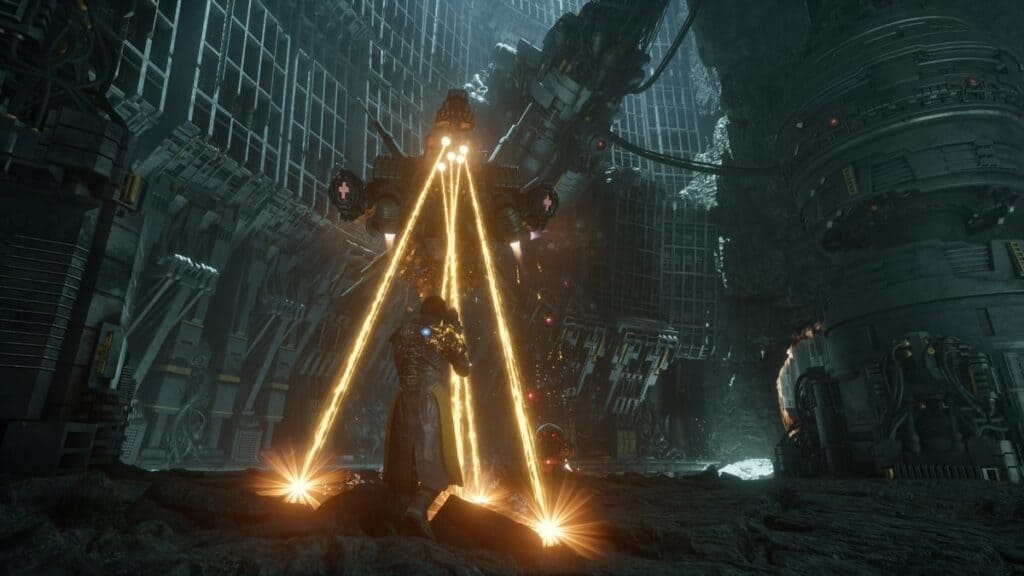
Saros will also appeal to survival horror fans. Image credit: Housemarque
The harder they fall
Boss fights are where things get very dicey and players will need to make sure they learn the enemy’s patterns and react accordingly rather than just diving in and shooting wildly. You may be able to defeat them first time, but if not, death, and trial and error will be your tutor. It can be frustrating to start again when you were so close to victory, but if you do, it’s always your fault. Saros is a fair game, and one that challenges you to get better and learn from mistakes.
One major improvement over Returnal is that Saros does have a permanent upgrade system, so if you’re finding a particular boss or level difficult, you can go away, grind a little, and come back stronger. However, this isn’t going to carry you, just make life a little easier. You’re not going to be able to tank or spam your way through these bosses, strategy is always key. Those who don’t engage with these mechanics and try to rely on grinding are soon going to find the game becoming tedious. As fun as the gunplay and trial and error is, there is a point where enough is enough, and you’re going to want to progress.
Saros is a fitting successor to Returnal and pushes the envelope further than it did in terms of roguelite action, shooting mechanics and storytelling. Housemarque is really starting to hit it’s stride with these adventures and we’re excited to see where they go from here. Those who loved Returnal will adore Saros, but those who aren’t fans of this obtuse and often gruelling style of gameplay may just find more of the same.