

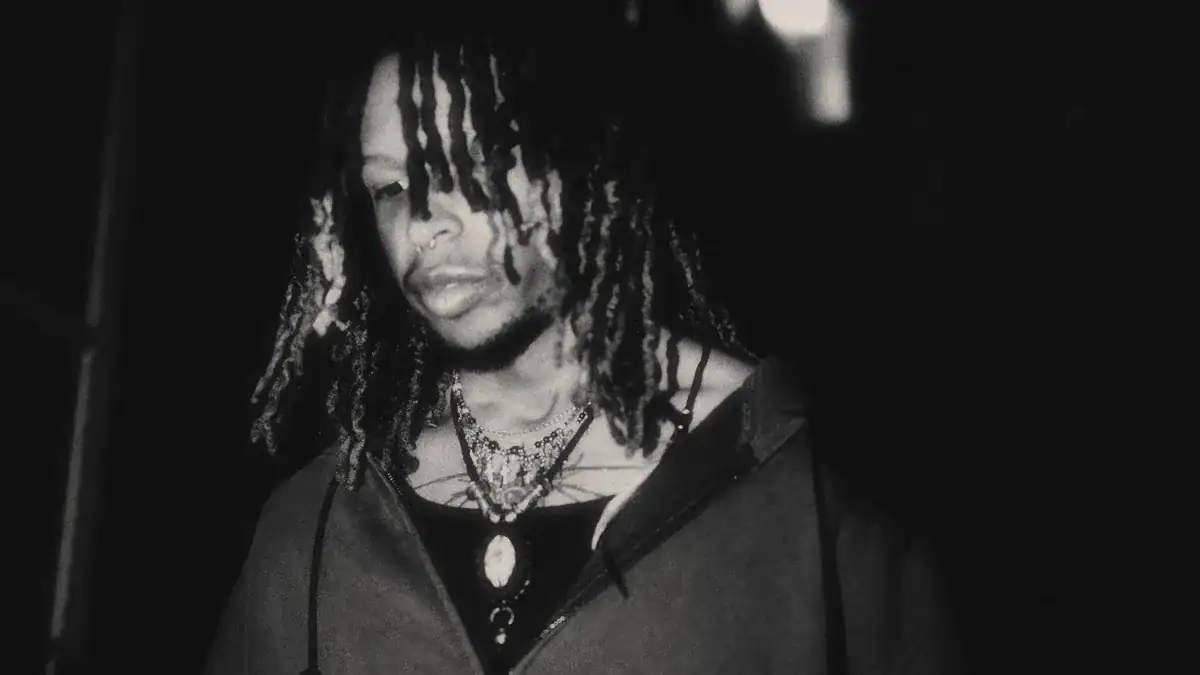
There’s a particular kind of world-building that only really happens when someone has lived inside their obsessions long enough to breathe them back out as art. ForBraydon Hill, better known asZeruel, that world is stitched together from late nights withSoulsbornegames,Metroidvanias, dark hip-hop, manga, anime, and the echo of his mother’s voice he grew up singing along to.
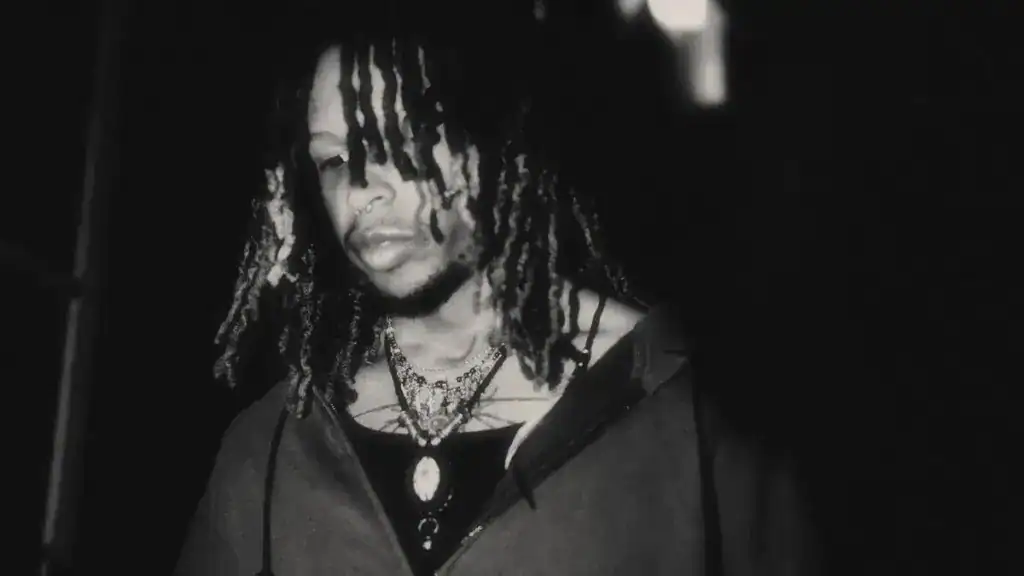
Credit: Elijah Agurs
On new album RUIN;REBIRTH, that inner universe is finally becoming fully realised – it is a dense, atmospheric space where shoegaze, doom, ambient textures, and brooding vocals collide. It’s the sound of a bedroom project that suddenly found itself on big stages and bigger playlists, and then doubled down by going deeper, darker, and more personal. “I’ve always felt like, for me at least, music is always best and comes easiest and feels most natural when I’m telling a story,” he explains early in our conversation. “I want to try and create a world that’s kind of like these games.”
World-building
Hill’s music has always had an inherently cinematic quality, but with RUIN;REBIRTH that instinct becomes the mission statement. The spine of the album is his obsessive love for video games – specifically the Soulsborne lineage and its orbiting cousins. “I’m super-big into gaming and manga and anime as well,” he says. “But primarily it’s been the Soulsborne games and other Metroidvanias as well – so like Dark Souls 1, 2, 3, Bloodborne, Elden Ring, and then some indie games likeHollow Knight.”
If you’ve seen the visuals around the record, gothic architecture, religious iconography warped into something more unsettling, figures caught between light and shadow, those references make immediate sense. During the writing of the album, one game in particular was a constant presence. “At the time when I was writing this record, Elden Ring was kind of the big thing,” he explains, “and I had also just picked up Blasphemous 2. I was like, ‘I really want to try and create a world… like these games.’ I’ve always been inspired by original soundtracks from games and movies and things, so that was essentially my goal with this record.
“I listen to music a lot while playing and reading, and the stuff that I play and read is oftentimes sort of dark,” he says. “I’ve never been super into bright-sounding music. Even with hip-hop and R&B, I’ve always been drawn to the darker music.”
From Awakening to RUIN;REBIRTH
Before RUIN;REBIRTH, there was Awakening, a record that quietly pushed Hill out of his room and into a much bigger conversation in modern alternative music. To our ear at least, Awakening is the more “shoegaze” of the two projects: dreamy, reverb-washed, rich in ethereal textures. RUIN;REBIRTH retains that, but adds weight. Across the world, treaming numbers swelled, opportunities arrived faster than he expected, and suddenly this thing he’d made “just for fun” had become the catalyst for an entirely new life. It was, as he puts it, a blessing and a curse.
“Awakening… I’m obviously blessed and super grateful for everything that project did for me,” he reflects. “That kind of came… it was just me in my room sort of having fun. I was still in school and working multiple jobs at the time. Once things sort of took off a little bit, I was like, ‘Okay, I want to almost like fast-forward.’ All the things I really wanted to do in music, I essentially got a jump on after that.”
RUIN;REBIRTH is that “fast-forward” rendered in sound. Where Awakening was dreamlike, this record is heavier, more atmospheric, more intentional in its architecture. Hill leans into the dual identity he hinted at before: the shimmering, shoegazy side and the darker, doom-tinted side that feels more aligned with his gaming and reading habits. “I think they’re kind of one and the same,” he says. “With Awakening, definitely a lot more of a shoegaze vibe, but the ambience, is sort of ethereal, almost archaic and kind of… angelic, that vibe was still what was in my mind the whole time working on this project as well. With this record, in addition to wanting to create the world, and the story being darker-themed, I also wanted, for live, to have moments where there was more energy.”
Loading the record with the right singles mattered to Hill. This wasn’t just about putting out the catchiest tracks; it was about easing people into the expanded version of his sound without losing the essence that brought them there in the first place. “Vessels was the first single,” he says, “which is probably the closest song to the previous era. It’s all clean singing and a lot of shoegaze-y parts.”
If Awakening fans needed a bridge into RUIN;REBIRTH, Vessels is that bridge: lush, melodic, recognisably Zeruel but hinting at what’s coming. “Return by Dawnis where I first started to show the other identity of the project,” he continues. “A much more darker vibe, more doomy, heavier, and of course there are the screams towards the end.”
Then there’sLimbo, which, for many, will be the entry point into the record. “Limbo’s kind of similar to Vessels, but overall the feel and energy are a little more aggressive,” he says. “Especially the ambient parts – that’s kind of a consistent thing throughout the record. I honestly think the singles represent the album pretty well. Maybe the album is a tad bit heavier than the singles, but for the most part they prepare people for RUIN;REBIRTH.”
Finding a voice
One of the most striking things about Zeruel isn’t just the production or the riffs – it’s that voice. “It’s kind of weird,” he admits. “I feel like my voice naturally is kind of deep, not super deep, but not very high. But when I sing it’s kind of high and airy. It’s weird.” That “weird” became a signature, shaped in part by an early love of Imogen Heap, who still sits high on his personal mixtape of all-time songs.
“One of my favourite artists, that leads to my vocal style, is Imogen Heap,” he says. “I’m super into her melodies. Once I started producing and doing things on my computer, I started fooling around with a bunch of different effects, and I think I found something that fits for me.”
His relationship with singing goes back further than production experiments, though, and straight into family life. “When I was younger, my mom used to sing a lot,” he says. “I would just sing whatever she sang. That’s where it started. Later, in high school, I wanted to start making music, but I thought I had to go to a big studio. I would just sing on GarageBand on my phone, covers sometimes, and sometimes just try to make my own songs that weren’t good at all. But that’s when I recognised I could carry a tune a little bit.” From there, it was repetition and curiosity: more songs, more experimenting, more late nights chasing a feeling.
Influences
Family isn’t just a footnote in Hill’s story; it’s core to how he understands himself as an artist and as a person. Hismother, a major musical force in his early life, passed away when he was young. “She was extremely musical,” he recalls. “Always singing, very involved in church. Her whole side of the family is super involved in church singing – my cousin and stuff. My mom was the rock and metal head in the family.”
Hisdad, meanwhile, is the grounding presence – the one he called when everything suddenly started happening. “At the moment things started to first take off, it was a big surprise,” Hill says. “I was always going to my dad like, ‘Dad, wait, these people… what is this? What’s going on? What do I do?’ I have him to thank for guiding me and keeping me grounded.”
Musically, his father comes from a different place, more hip-hop than metal – but has become increasingly drawn into Hill’s world. “My dad was more into hip-hop,” Hill says. “But he’s grown into it now. He’s listening to all these bands; sometimes he’s showing me stuff I haven’t even heard of.”
There’s also hisbrother, who used to sing a lot when he was younger. Hill doesn’t come from a conservatory-style, formally trained background, but theraw musicality was there: voices in the house, melodies in the air, songs shared casually rather than as performance. “Music’s there,” he says. “It’s not like some people who started instruments as a kid. It wasn’t quite that, but it was definitely involved.”
The fast rise
For all the fantasy imagery and world-building talk, Hill’s lived experience is very real: the shift from juggling school, multiple jobs and music to touring, labels and pressure. “Being on the road, a lot of times it was just me and my other two bandmates,” he says. “There’s a lot of maturity required, a lot of responsibility. That’s helped shape me as an individual, for sure.” He insists he hasn’t fundamentally changed as a person – “I don’t think I’ve changed too much; I think I’ve grown maturity-wise” – but he’s keenly aware of how quickly everything moved.
studio vs stage
One of the biggest hurdles in bringing RUIN;REBIRTH to life – and then taking it on tour – was doing harsh vocals. On record, they feel natural, integral to the push-and-pull between beauty and brutality. Off record, getting there took serious graft. “This record was in a stagnant place for a little while because I could not do harsh vocals for the life of me,” he admits. “At all. I was just working at it and practicing and practicing, and eventually I got to a point where I could at least record them.”
Studio success, however, doesn’t automatically translate to the stage. “Last year, we were teasing a song on tour, and when Return by Dawn came out we were performing it,” he says. “I noticed I’ve got a lot of work to do, because that was the only song we were doing with harsh vocals, but by the end of that song, my voice was pretty tired and worn out.”
That harsh-vocal work coincided with him being relatively new toguitar as well. Awakening’s later tracks were among the first things he’d properly written on the instrument, and for RUIN;REBIRTH he dug in hard: tutorials, learning songs he loved, then forging his own style. “Studio versus live is two completely different things,” he says. “Being new to playing guitar, doing harsh vocals, and even clean vocals – I don’t have classical training – I’ve been doing a lot of exercises with coaches to get better. It’s tough, but I really want everything live to sound as best as it possibly can.”
That work ethic, the hours with coaches, the willingness to be a beginner again – might be what resonates most powerfully with younger musicians watching his rise. The message isn’t “it just happened”; it’s “I’m still figuring it out, but I’m doing the work.”
A sonic mixtape
Ask Hill to define himself by a handful of songs and he’ll joke that it’s an impossible task, then sit in silence for a bit, until the answers come. The three tracks he lands on tell you a lot about the DNA of Zeruel.
At the top of the list isImogen Heap – “Have You Got It in You?”fromSpeak for Yourself– a masterclass in off-kilter melodies, layered vocals and emotional ambiguity.
Then there’s the outro track from Alcest’s Écailles de lune – expansive, emotional, cinematic in its own right.
Finally, he chooses“Rosemary” by Deftones,a band whose atmospheric heaviness and sense of space seep subtly into RUIN;REBIRTH’s DNA.
Taken together, those three tracks form a sort of spiritual blueprint: electronic-tinged experimental pop, expansive post-rock/shoegaze feelings, and alt-metal that prioritises mood and emotion.
The future
Spend any time talking to Hill about RUIN;REBIRTH and you realise the album is just one expression of a larger, unfolding idea. The visuals, he admits, almost pushed him into comics. “You mentioned a comic book type thing,” he says. “I actually thought extensively about doing that for the record. We’re trying to do visualisers for each song, and the images are really awesome, so maybe I’m hoping to print a few books – maybe not a full comic, but a lyric book, and then for each song it has the images for the song and the lyrics. I feel like that would be really cool for people.”
It’s easy to imagine RUIN;REBIRTH as a companion piece to a graphic novel or a long-form lore project.
Touring the UK
For a project created at home, Zeruel’s connection to fans has quickly become global, and the UK already holds a special place in his story. Touring with Deafheaven and Portrayal of Guilt, he found himself playing to crowds thousands of miles from home who somehow already knew the world he was building. “When we went over there this past year,” he says, “it was so awesome, literally one of the best moments in my life, probably top three. Truly life-changing. Everyone showed us so much love. We’d love to come back and play in more cities we missed.”
UK fans hoping for a swift return might need a little patience, the calendar is packed and logistics are complex, but the intent is there. “We’ve talked about it briefly,” he says of UK dates, “but not extensively. I’m hoping we can get something to fit at the end of this year. If not, then for sure I think next year we’ll be trying to get over there.”
Rebirth, in real time
From his mother’s voice to Soulsborne boss fights, from Awakening’s surprise success to the carefully plotted architecture of this new record, Zeruel is navigating it all with a calm that feels at odds with the chaos of his world-building. “You seem well-rounded talking about it,” I tell him at one point. “It feels like an adventure for you?”
“Yeah, exactly,” he says. “It was definitely a ‘whoa’ at first, but now… it’s an adventure.”
Listen below: