


Most people who spent the 1970s and 1980s inside the rock and roll machine came out the other side with a few gold records on the wall and a lifetime of stories. Howard Bloom came out of it looking at the stars. The man who once helped shape the public images of Michael Jackson, Prince, Bob Marley, Billy Joel, Kiss and AC/DC has spent the past two decades pursuing an even bigger audience, the entire human species, and an even bigger stage, the solar system itself.
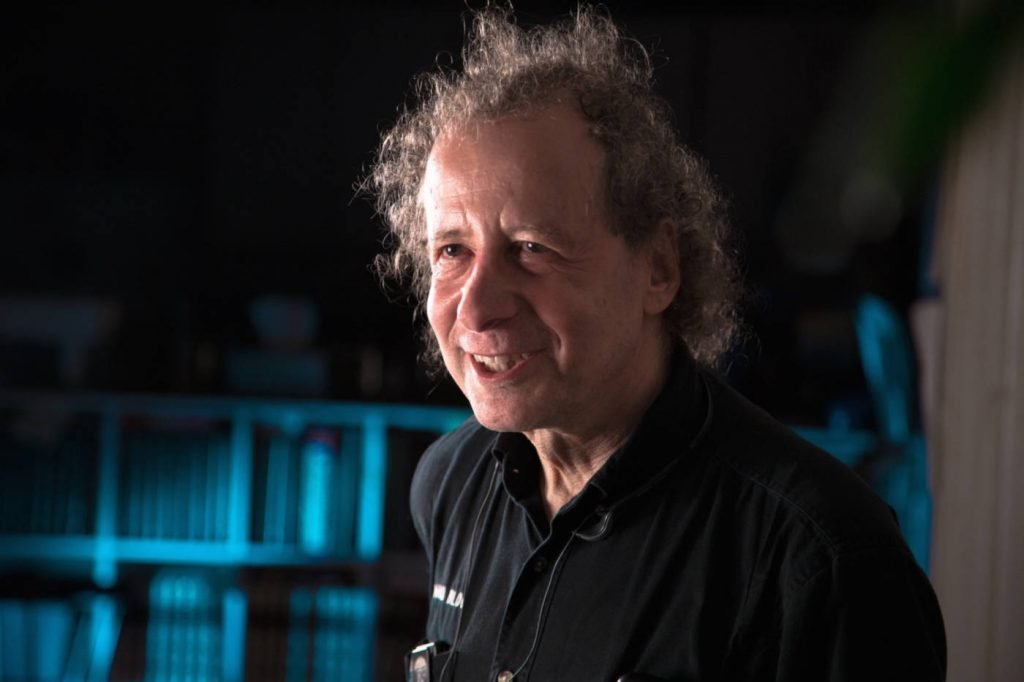
It sounds like an unlikely leap until you look at where Bloom started. Long before he ever set foot in a recording studio, he was a science-obsessed kid in Buffalo, drawn to cosmology and microbiology by the age of ten. At sixteen he was assisting with immune system research at Roswell Park. When he swerved into music at twenty-five, first as an editor at Circus magazine, a publication Rolling Stone’s Chet Flippo credited him with turning into the first heavy metal magazine, he did not leave science behind. He simply brought it with him. He treated the music business as a living laboratory of mass behavior, studying how crowds form, how passions spread and how a single performer can unite thousands of strangers in one shared emotion.
The Howard Bloom Organization, founded in 1976, grew into the largest public relations firm in the record industry. But the question underneath all that work was never really about selling records. It was about what moves human beings collectively, and where that collective energy could take us. Eventually, Bloom decided the answer pointed upward.

In 2006, he founded the Space Development Steering Committee, a coalition that brought together the leaders of the National Space Society, the Mars Society and the Space Frontier Foundation. The roster he assembled would have impressed any rock promoter. Over the years, the committee has included Buzz Aldrin, the second man to walk on the moon, and Edgar Mitchell, the sixth, along with members drawn from NASA, the National Science Foundation, Boeing, Northrop Grumman and the Department of Defense. Bloom also served on the board of the National Space Society and co-founded the Asia Space Technology Summit.
What did a rock publicist bring to a room full of astronauts and aerospace engineers? Exactly what the space movement often lacked: the ability to make people care. The space community had spent decades dreaming up ways to carry human life beyond Earth, but those visions mostly stayed inside technical journals and conference halls. Bloom set out to take those private dreams public. The committee’s founding mission describes the goal in grand terms, making life a multiplanetary project and opening a vast new frontier to the entire family of DNA. Put simply, he wanted to sell the stars the way he once sold superstars.
His space work has been anything but ceremonial. Bloom has become one of the most persistent champions of space solar power, the idea of collecting sunlight in orbit and beaming the energy down to Earth. He argues it could eliminate the human contribution to global warming from energy production, and he once counted India’s former president Dr. A.P.J. Abdul Kalam as a partner in that advocacy. Alongside former New York Governor David Paterson and retired Air Force Lieutenant General Steve Kwast, he has publicly called for a dramatic simplification of NASA’s Artemis moon program. His committee floated a “Stairways to Mars” concept for way stations along the route to the Red Planet, and he has worked on a multiplanetary mission design funded by the Keck Institute for Space Studies at Caltech.
Meanwhile, his ideas about mass behavior kept traveling into unexpected places. His book Global Brain: The Evolution of Mass Mind from the Big Bang to the 21st Century became the subject of a 2010 symposium hosted by the Office of the Secretary of Defense, with participants from DARPA, the State Department, the Energy Department, IBM and MIT. He has lectured at Yale, Stanford and Columbia University’s Department of Neuroscience, and his scientific writing has appeared everywhere from theoretical physics preprint archives to NASA’s book Cosmos and Culture.
The thread connecting all of it is surprisingly simple. Whether he was standing in the wings of an arena or sitting at a table with moonwalkers, Howard Bloom has always been fascinated by the same thing: the power of human beings acting together. A sold-out stadium and a mission to Mars are, in his view, two expressions of the same force, the urge of individuals to merge into something bigger than themselves and reach for what seems impossible.
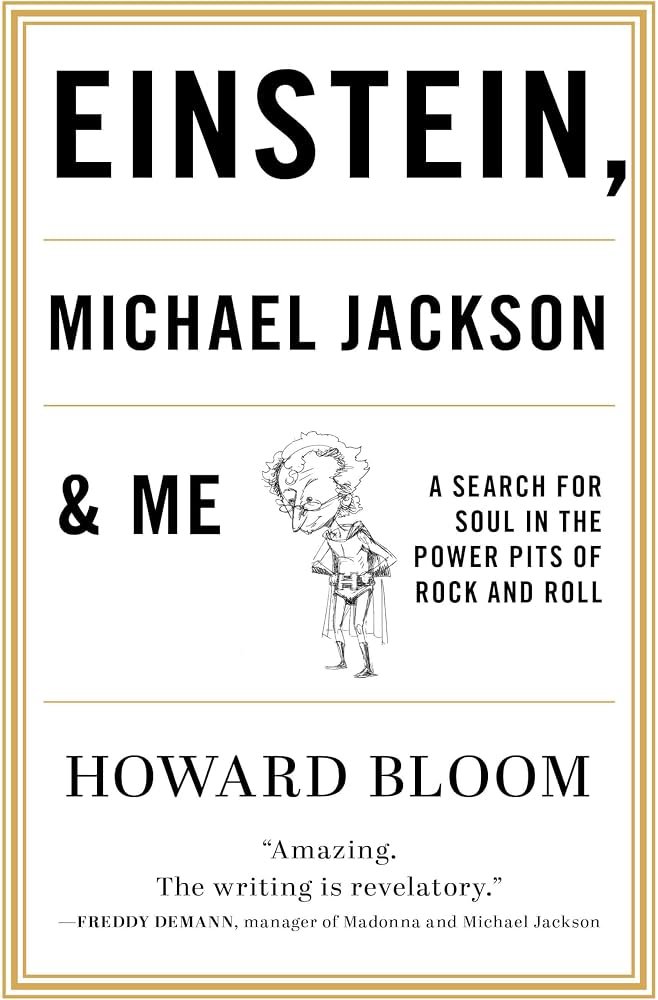
That is the story he has been telling, in one form or another, across books like The Lucifer Principle, The God Problem and his memoir Einstein, Michael Jackson & Me. The title of that memoir says it all. Einstein and Michael Jackson, the cosmos and the concert stage, have never been opposites in Howard Bloom’s world. They are two chapters of the same adventure.
Rock and roll promised its fans that they could reach the stars. Howard Bloom is one of the few people who took that promise literally.
The official website for Howard Bloom may be found at https://www.howardbloom.net