

Originally published in Uncut Take 222 (November 2015 issue)…
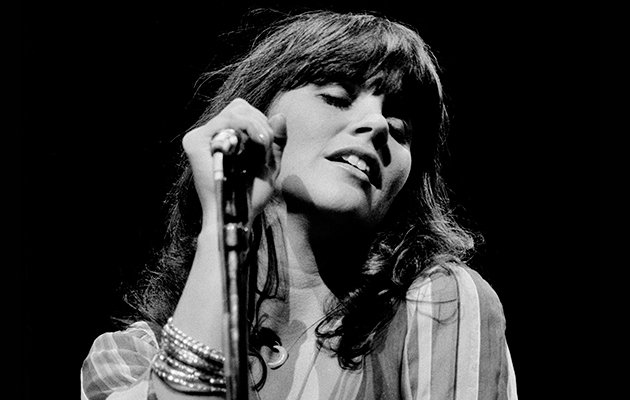
“I really was terrible in the beginning,” laughs Linda Ronstadt. “I had no idea what I was doing. It wasn’t until about 1980 that I really started to learn how to sing.”
While the millions of fans who repeatedly sent her ’70s work to the top of the American charts would likely disagree with her humble assessment, Ronstadt’s words are testament to her eagerness to try new things. Over her long career, the Arizona-born singer has tackled a variety of styles, from majestic country-rock songs written by James Taylor, Jackson Browne and her friends in the Eagles, right through to Gilbert & Sullivan operas, jazz standards and Spanish-language mariachi, a reflection of her part-Mexican heritage.
Although the effects of Parkinson’s have left her now unable to sing, Ronstadt has lost none of her deep passion for music. “I’ve been a singer all my life,” she says, “so it’s very odd not to be able to do that. Especially when I go to visit my family, as we always sang together and now we can’t. But I can play music in my head – I’ve got a huge jukebox in my brain.”
______________________________
Silk Purse
Capitol, 1970
Following her work with The Stone Poneys and ignored solo debut Hand Sown… Home Grown, Ronstadt went full-on country for her second – heading to Nashville to cut versions of “Will You Love Me Tomorrow” and “Lovesick Blues”.
RONSTADT: I met Kenny Edwards in 1965, and he, Bobby Kimmel and I formed a little group called The Stone Poneys. “Different Drum” was a hit for us. The label wanted me to go solo in the beginning, but I felt it was disloyal, and I wasn’t ready to be a solo artist. Kenny was interested in seeking truth and beauty, so after a couple of years he went off to India on a quest, and I went solo. By 1970, all of us at The Troubadour [in LA] were listening to traditional country, Hank Williams, Merle Haggard. But we were also laminating rock’n’roll over the top. They needed to have a little bit more aggressive interaction, we thought. I liked Merle Haggard but also Chuck Berry, so you try to get them both in there! I went to Nashville to record Silk Purse, but Californian country has a different groove to it. We had much more liberal attitudes on the West Coast. As for the cover, at that time, you didn’t wanna dress straight, you wanted to look funky. I didn’t know what in the world that meant, but I knew funky had something to do with earthiness. So I thought of this character, Moonbeam McSwine, from a cartoon called Li’l Abner – she was always sitting in a pen with pigs, very glamorous but a hillbilly with a ripped skirt and a torn blouse. So I thought I’d do a send-up of Moonbeam McSwine, to out-funk everybody. It was a joke, I figured everybody would know what I was talking about. I don’t know that they did.
______________________________
Linda Ronstadt
Capitol, 1972
Her third album, a commercial failure, is now seen as a country-rock classic. And in assembling her backing band, Ronstadt inadvertently put the Eagles together, too…
I had a hand in forming the Eagles, yes! But it was their talent and their mutual interaction that really did it. I asked my friend John Boylan if he’d help me put a band together. So we walked to The Troubadour one Monday night, and heard this band called Shiloh onstage. They were playing my version of “Silver Threads And Golden Needles” exactly off the record, including the guitar solo. So I thought, ‘Maybe I can just hire this band, they already know the arrangements!’ But I had some players already, so we went and asked Don Henley, the drummer in Shiloh, if he’d like to play for my next tour. Then I needed a guitar-player, so I asked Glenn Frey, who used to sing with my boyfriend, JD Souther. When we were on the road, Glenn and Don roomed together, and they each discovered that the other was a good singer and writer, so they started working together. By the end of the tour, they decided to form a band. John suggested Randy Meisner to play bass and I suggested Bernie Leadon, so those four became my band with the idea that they’d go on their own as soon as they got a deal.
There were a lot of great writers around then. California is like a big lens, people would come from other places and California would focus them. A guy like Bernie would come from Florida, or Glenn would come from Michigan, or Don from Texas, and by the time they got to California the Californian sensibility would put its own little spin on things. Then it would be broadcast to the world. Neil Young is another one – I still think he’s one of the best guys that ever came out of rock’n’roll, he’s just brilliant.
Before this album was released, we were in Tennessee doing The Johnny Cash Show. The show took a long time to tape. After we finished, Neil Young said he was gonna go do some recording and asked if I’d come and sing a harmony. James Taylor was on that same show, so he came along to play. He wound up playing a six-string banjo. We recorded “Heart Of Gold” and “Old Man”. It took us all night – it was dawn and snowing when we came out. My knees were sore because the only way James and I could get on the same mic was for me to kneel and for him to sit down in the chair. If I knelt up and stretched I could just about share a mic with him!
______________________________
Heart Like A Wheel
Capitol, 1974
With new producer Peter Asher refining her sound, Ronstadt hits the big time, winning a Grammy Award and a No 1 spot for both the album and its first single, “You’re No Good”
One of the things I really liked about Peter was that he understood that song, “Heart Like A Wheel” [written by Anna McGarrigle]. Everybody I played it for before said, “Oh, it’s not commercial,” or, “It’s too corny.” I just thought it was a gorgeous song and I wanted to perform it so much. I covered “Willin’” by Lowell George here, too. The first time I ever saw Lowell perform I just fell on the floor. I was knocked out. But I wanted to know what tuning he’d written the song in, so I could learn it. It was open G, but that wasn’t good for my voice, so he came over to my house and showed me how to play it in open E tuning. Yeah, I had a private guitar lesson with Lowell! This album was a big hit, but it was different from the way it is now, when everybody’s on Twitter, and they have a huge gaggle of paparazzi running after them. It meant that I got a somewhat nicer house. By that time, the scene at The Troubadour had wound down so we didn’t see each other’s concerts as much. Life got a little bit more isolated then. It became a little bit more difficult to go to the market and shop because people would say, “Sign your autograph,” while I was trying to buy chicken. So I’d get a person to go to the market for me. Around this time, I performed a lot of songs by JD Souther. JD is such a good writer. I mean, he was just my boyfriend at the time and I thought his songs were good, but I really see now what an extraordinarily high-quality writer he is and how important he has been on the scene and to the Eagles’ music.
______________________________
Simple Dreams
Asylum, 1977
As punk peaked, Ronstadt was covering Roy Orbison on her huge eighth album, knocking Rumours off the US top spot in the process.
We were in our own little dream at this time. I remember JD Souther and Jackson Browne came out to my house and Jackson taught me “Poor Pitiful Me”, ’cos he was producing Warren Zevon at that time. That’s what we were doing in those days, you’d go to somebody’s house and you’d get the guitars out right away. You’d start to play something and someone else would add a harmony, and it would just go on for hours. Sometimes we’d stop and get something to eat, but not very often. And that’s how we got our songs around, that’s how I found songs, that’s how writers got their songs recorded, just playing in somebody’s living room. Warren Zevon never came to my house, though. I didn’t know him very well, he was incredibly shy. He was a heavy drinker so he hardly lifted his eyes off the floor. But JD and Jackson were close to him, and I just loved his songs. I’ve always wished I’d recorded “Accidentally Like A Martyr”; I just feel like it was a great opportunity I missed. I was intimidated by it at the time, and I loved the way he’d recorded it and I didn’t think I could beat it, but I think I could’ve if I’d worked at it. This knocked Rumours off the top? I didn’t know that. What an amazing band – Stevie’s such a good singer, and so is Lindsey Buckingham, and Christine McVie.
______________________________
What’s New
Asylum, 1983
Ronstadt rejects life as a stadium pop act, teaming up with Sinatra’s arranger Nelson Riddle for an album of ornate jazz and swing standards
I wanted to find different ranges that I always knew were there in my voice, but that I wasn’t getting to access with rock’n’roll. I didn’t like playing those huge arenas. I went to Joe Papp at The Public Theater in New York, not realising that there was a huge line of people begging him for a job, and said, “I’d like to come and play.” He must have thought I was an idiot. Just by coincidence, they were doing Pirates Of Penzance and the director wanted to do it with pop singers, not classical. I sang Pirates for a year on Broadway and then we did the movie, then I went back and sang La Bohème at The Public Theater. I went to a dinner at [Atlantic A&R] Jerry Wexler’s house, and he’d say, “You wanna sing standards, you could really sing ’em.” I loved those things, been listening to them since I was a kid. Next thing I knew we were recording in a studio, but the way Jerry produced was very different to what I was used to. I didn’t think the arrangements suited my voice. I wanted to redo it, but the record company said it would be the end of my career because I’d been out of action for a year already on Broadway. So I made [1982’s] Get Closer, but I was still thinking about those Sinatra songs. As soon as Peter Asher heard the quality of Nelson Riddle’s arrangements he was convinced. Nelson was at the top of his talent when he wrote my charts. His string-quartet arrangement of “My Funny Valentine” is my favourite of any I’ve ever heard.
______________________________
Dolly Parton, Linda Ronstadt & Emmylou Harris
Trio
Warner Bros, 1987
A project years in the organising, Ronstadt teamed up with two other country giants for a mega-selling collaboration.
Whenever we saw each other in the ’70s, the guitars would come out and we’d start to sing right away, like we always did. The minute we heard the sound of our three voices together we just went, “We have to record together. We’ve got to do it.” But it was hard. Dolly’s career was just taking off then and Emmy had her own touring thing that she was doing, and I was doing what I was doing with rock’n’roll. It was hard to get all of our schedules together and decide who was going to produce it and how it was going to go, what we were going to aim for. Emmy and I really wanted to do traditional stuff, because we had Dolly, who’s such a good traditional singer. It worked out, finally, it just took a lot of years. Dolly was very involved with the television show she was doing, so she couldn’t tour with us. I always thought it was a shame that we never toured together, because we would’ve refined what we were doing on the bus singing together, and that would have made a big difference. And doing it night after night we would’ve gotten really tight. Emmy and I always could finish each other’s sentences, our sensibilities are very similar and both of us were big fans of Dolly. I liked it best, frankly, when Emmy was singing lead, Dolly was singing on the top and I sang on the bottom, that was my favourite configuration of our harmonies. I thought that was really the Trio sound.
______________________________
Canciones De Mi Padre
Asylum/WEA, 1987
Exploring her Mexican roots, Ronstadt tries her hand at mariachi – and bags what still could be the biggest-selling foreign-language album in the States.
I have a little rule for myself: I never try to do any kind of music that I hadn’t heard at home by the age of 10. We sang these kind of songs as a family, but we’d know one or two verses and la-da-da-da-da… Sometimes my two brothers and I would sing huapango, which is an indigenous Mexican rhythm, it’s just beautiful, I love it. I had to do a lot of wood-shedding to get up to speed with these songs. Mexican country music was always in my background and really informed my rock’n’roll singing style more than anything. Lola Beltrán was an incredible singer – to Mexico she was like what Édith Piaf is to France. She had that great huge belting style, and that’s what I copied as a child. I was working with the best mariachi group in the world, the Mariachi Vargas, and they introduced me to another band, Mariachi Los Camperos, who are the second best group in the world or the equally best group in the world, and they mentored me. They were living in Los Angeles at the time, working there and they mentored me. I’d go down and rehearse with them and they’d help me. In the mornings, before I’d record, I’d be working with a tape in bed, six o’clock, trying to get the songs into my mouth and into my muscle memory. Because I don’t speak Spanish – I know some words in Spanish, I can do some sentences in the present tense, but I’m not fluent. There’s a lot of Mexican records that sell in huge numbers here, so it’s hard to believe that this album is the biggest non-English-language record to this day.
______________________________
Winter Light
Elektra/WEA, 1993
Sales were disappointing, but this is one of Ronstadt’s own favourites – the pastoral, hymnal title track is even a rare co-write from her
Being a writer wasn’t what I was. Randy Newman says he gets up and goes to his office, sits down and starts writing; that’s what a writer is. I never did that. I got up in the morning and drank a cup of tea. I didn’t think there was any reason for me to go grinding out my own songs when I had people like JD and Jackson and Neil Young around. I did my best singing on Winter Light. It might not have been what everyone wanted to hear, but technically I could sing better. And I had all my voice for Winter Light – after that my voice declined. With the title track, a friend of mine, Fred Fuchs – who was working on a movie called The Secret Garden directed by Agnieszka Holland, who I love – called me up. He said they hadn’t been able to find a title song that everybody liked, and I said, “Send me the soundtrack and the movie and let me hear what it sounds like.” I liked the soundtrack, so I got my friend Eric Kaz and we put two pieces from it together and made a verse and a chorus and a bridge. Then I wrote some lyrics and Eric wrote some lyrics and we put it all together. And the composer really loved it, and Agnieszka Holland really liked it. I love that track. I never listen to anything that I record, but I put that on my baby record [1996’s Dedicated To The One I Love], which I recorded so that I could get my children to go to sleep, and it worked like a charm.
______________________________
Linda Ronstadt & Ann Savoy
Adieu False Heart
Vanguard, 2006
Cajun coda: Ronstadt’s final record, featuring versions of songs by Richard Thompson, Julie Miller and Bill Monroe
Adieu False Heart was the last recording I made before I got Parkinson’s. I was already struggling with it, but I didn’t know that’s what I had. I was having a really hard time singing and I couldn’t figure out why. Ann Savoy was a really good friend of mine and we started singing together. Because Ann’s a true alto to my soprano, it was a nice duet. And her voice is very loud, so I could sing very softly, which is about all I could do at that point. We covered Richard Thompson’s “King Of Bohemia”. Ann and I are both slobbering, drooling fans of Richard. He’s a true original. His son Teddy is great, too. Boy, were I a younger girl I would have worn two coats of mascara for him. Out of all my work, I do have a real soft spot for this record. I felt like I didn’t really start singing with my natural voice until 1980. And then after that, everything I sang, whether rock’n’roll, Mexican music or country music, I thought was better because I was singing with a natural voice instead of it being something I was trying to cobble together with something I’d heard or was trying to imitate.