

In Malcolm Gladwell’s 2008 book, Outliers: The Story of Success, the British-born journalist contends that “you need to have practiced, to have apprenticed, for 10,000 hours before you get good.”
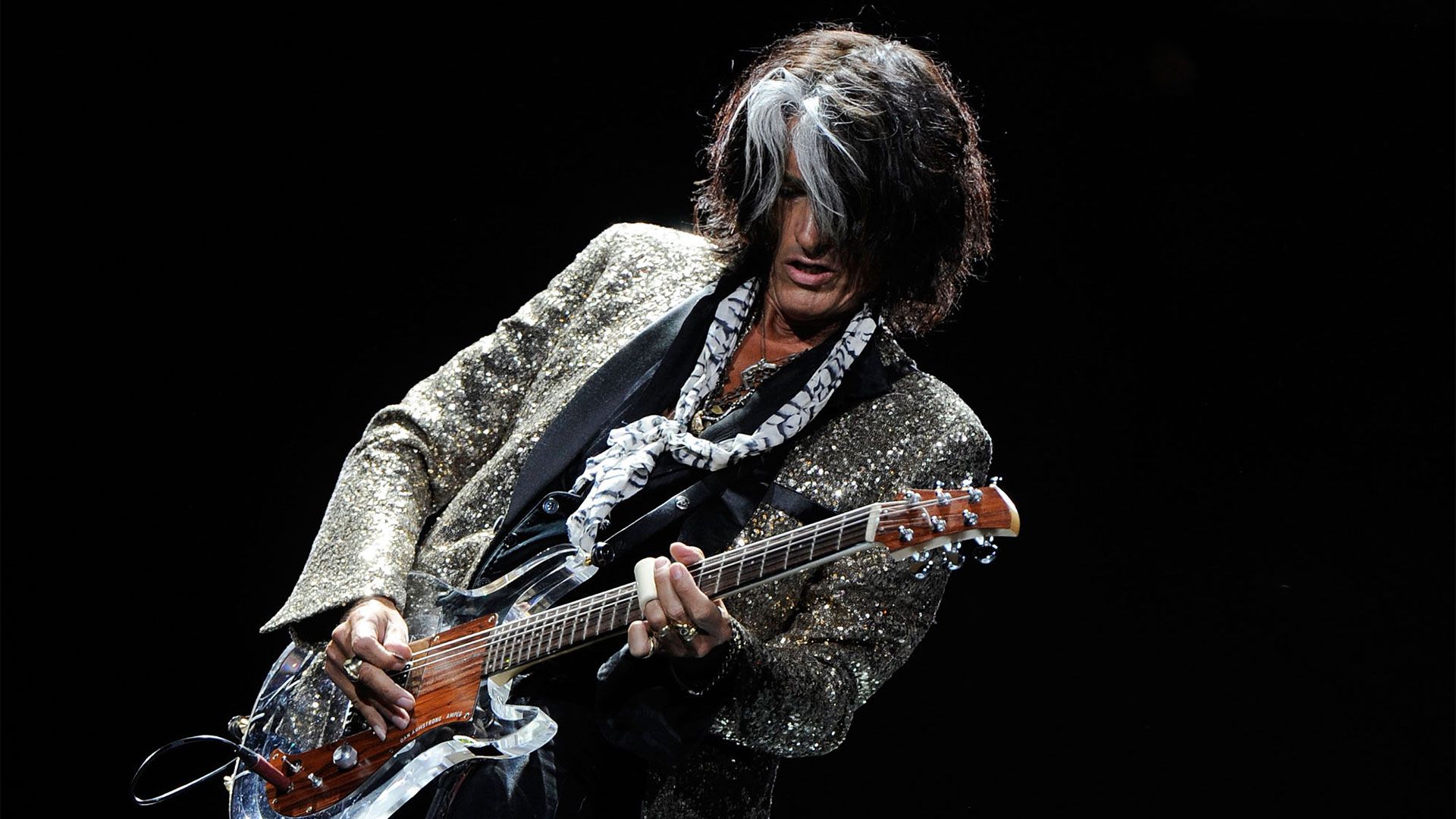
Let’s break it down, then. That’s a solid 20 hours per week of focused practice for a decade, before Gladwell would even begin to consider you an expert in your field. Here’s someone who certainly cements Gladwell’s theory: Aerosmith’s Joe Perry.
The guitarist began playing at age 10 and hasn’t stopped for the last 65 years or so, performing on some 24 studio albums with Aerosmith, The Joe Perry Project and Hollywood Vampires.
In this 2018, Perry goes back to his beginnings as a student of the guitar, lists his hardware requirements, and has some advice for would-be guitarists along the way.
Latest Videos From Louder

What sparked your interest in learning to play guitar?
“I tried a couple of instruments out when I was really young; it seemed like my friends were doing piano lessons or joining the school band or whatever. I had a go at piano when I was 10 or whatever; it was all about technical stuff and classical music and nothing really hooked me. I tried clarinet for a month. There was something about the guitar that felt comfortable. My Portuguese uncle had a four-string – a cavaquinho – it kinda looks like a ukulele and he’d let me play it once in a while. I was fascinated with it. This was before The Beatles, before I discovered rock n’ roll. I convinced my parents to get me a guitar when I was 10 or so. It was a student guitar, whatever they called it back then. It went on from there. I discovered rock n’ roll on the radio and I was able to play along to some of the songs. Then The Beatles came out and that pretty much decided it.”
Did you learn to play I’m Down early on? You’d have been 15 when they released that.
“You know what? Oddly enough, when I first met Steven [Tyler, Aerosmith vocalist], the band I had with [bassist] Tom Hamilton [called The Jam Band] played clubs and house parties and things like that – and Steven didn’t have a band at that point. He was thinking about quitting the business. A friend of his, John Bonham’s drum roadie Henry Smith, said Jeff Beck was putting a band together and was looking for a singer and maybe he should send him a tape. Steven asked if we’d back him up on a demo tape and the song was I’m Down. We recorded it one afternoon and he sent it off. That was the first time we’d played a song together.”
Did you ever take formal lessons?
“My parents didn’t want me to get an electric guitar, but they bought me an acoustic one – the electric guitar had a juvenile delinquent image in their minds with Elvis and the rockabilly thing. They said I had to take lessons, so I booked some lessons with this guy who taught guitar in his studio. I mentioned a couple of songs I’d heard on the radio. He said I could learn those, but should start with the basics and started pulling out all this classical music; looking back it would have been good to have that background but I wanted to make those sounds I was hearing on the radio. The next Thursday, the school bus went has his house and there was a hearse outside. That afternoon, I found out he’d passed away. I wasn’t in a hurry to find anyone else to fill that position. So I played along to the radio and got a couple of Mel Bay books to learn the chords and I taught myself that way. There were a couple of guitar players who I had a few lessons with, but I picked up bits and pieces.”
The Beatles aside, which bands an influence on you during your early years as a player?
“Pretty much any guitar I heard on the radio and when I got older, through records. Friends had older brothers who’d bring records back from college or vacation. I was a sponge and listened to the different ways people were playing guitar. It wasn’t necessarily that I liked the music, but if it had a guitar, I’d listen to it over and over again. When I got older, the English Invasion was starting to get into full swing and was really attracted to the music those cats were playing, especially The Beatles, the Stones and learned a lot from their music. Or even music in the commercials on TV or the radio. I’d record them and play along – anything I could get my hands on. It was slim pickings in the little town I grew up in; a couple of pop radio stations and that was it. When I was older, I’d go to clubs and talk to the bands after the shows and it wasn’t long before I put a band together myself.”
How disciplined were you with practice when you were first learning?
“When I think back, I had a guitar in my hand most of the time. I wasn’t what you’d call an achiever in school so there was always a battle; I’d be in my room supposedly doing my homework but my parents would hear me playing my the guitar. ‘Put that down, you’ve got to study!’ Even when I was in prep school, they said they’d take my guitar from me until my grades improved; that didn’t last long as I’d sneak away and play it quietly. I always found a way.”
When did you get your first electric guitar?
“I had one by then. I’d saved up from odd jobs and my parents chipped in. I explained that my acoustic wasn’t giving me what I wanted. I got a Guild Starfire IV, which is basically a Guild version of a [Gibson] 335. I had that for a couple of years.”
Do you have a vague idea of how many guitars you own?
“I traded the Guild Starfire very early on. I traded that in for my first Les Paul. But over the years, I’ve managed to collect about 300 or 400 guitars. It’s hard to say!”
Is there one guitar you naturally gravitate toward more than the others, and why?
“I go through phases. At the moment, it’s a guitar I helped build in 2000 – it’s got a Fender body and Warmoth neck and bits and pieces. I’ve had it adjusted and it suits the way I’m playing right now and take it everywhere.”
Do you give your guitar nicknames?
“I’ve got a guitar which is a kind of a copy of the one I made, which I call the Admiral-caster. The road crew called me the Admiral during the Joe Perry Project days and it stuck. Then there’s the Billie guitar, which is a 335 which has my wife’s image painted on it. When I went to Gibson for a particular guitar, I knew I wanted to have her picture on it, I wanted one with the most space on it for the artwork and it turned out to be the B.B. King Lucille model. It has a tone and volume knob, so it wouldn’t break up the artwork and it turned out to be one of my favourite guitars. It’s a great sounding guitar and have it out on the road with me all the time.”

Beyond craftsmanship, what qualities do you think truly make a guitar special?
“It’s a guitar you don’t want to put down when you pick it up to play it. Every guy or girl who picks up a guitar will know that. It talks back to you. There’s always a new tone or sound you want to explore. You discover pretty quickly how the little details can affect the overall feel of it. It feels like it’s part of you. That’s pretty much it.”
Which players continue to inspire you today, particularly among the newer generation of guitarists?
“Not much has changed. I still listen to any kind of music; there’s electronic music that’s really popular now and I’m influenced by a lot of the sounds they make and try to emulate some of those sounds; it’s inspiring. Jack White is a really inventive guitar player, of course. Lately I’ve been listening to Captain Beefheart, or the Mothers of Invention, music I listened to way, way back. Beefheart’s amazing. I’ve been listening to that a lot and driving everybody crazy lately.”
You can take a guitar to a beach party – you can’t do that with a piano… or a clarinet.
Joe Perry
What is it about the guitar that gives it such an emotional pull compared with other instruments?
“When I picked up that ukulele thing, there’s something about it that felt right in my hands. I’ve thought a lot about it. It’s a polyphonic instrument – you can play chords on it, you can play solos on it and anything in between. It’s portable. When you’d walk down the street aged 17 or 18, people would always ask you about it. There’s the sounds it makes.
“It came into its own when it became electric and when Jimi and those guys got their hands on it, it morphed into a whole other thing.
“It’s a versatile instrument on many levels. To get that impact sonically, used to take a 100-piece orchestra and now you can get that with one guitar. Obviously you need an amp or a PA system! Then you’re filling a 15,000 seat arena or a 50,000 seat stadium with this incredible sound. It’s the versatility of it and you can take it anywhere. You can take it to a beach party – you can’t do that with a piano… or a clarinet.”
For someone buying their first guitar today, what do you think matters most when starting out?
“It’s about the guitar finding you. Stick with it. There’s a learning curve on any instrument. It’s not that painful, stretching to get some of the chords. You’ve got to build up your callouses. Now, with light strings, even the least expensive beginners guitars are a lot more comfortable playing than the student guitar I had. My fingers hurt for weeks. If you’ve got the drive to get through that, you’re on your way.”